
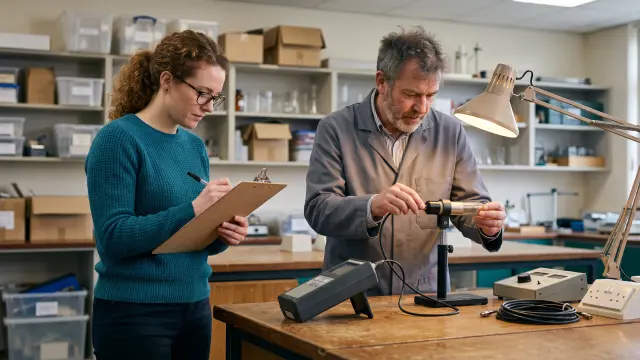
How do you use a Geiger–Müller tube for the radioactivity required practical?
A Geiger–Müller tube is used with a compatible counter or ratemeter to detect ionising radiation and record count data. In schools, every source-based activity must follow the local rules, employer arrangements, Radiation Protection Adviser advice and current CLEAPSS L093. Source type, activity, distance, exposure time, detector voltage, handling and storage must never be inferred from generic instructions.
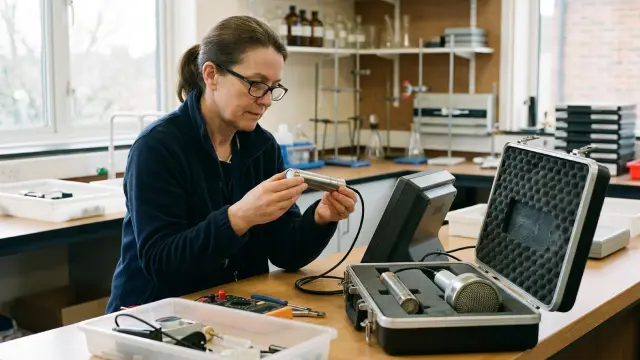
What Geiger–Müller tube does a secondary school physics department need?
A school Geiger–Müller tube must be selected as part of a compatible counting system and the department’s approved radiation arrangements. Compare window type, sensitivity, operating requirements, connector, counter compatibility, protective construction and intended demonstrations using CLEAPSS L093 and GL138. Purchasing a detector does not authorise radioactive-source work or replace Radiation Protection Adviser and employer controls.
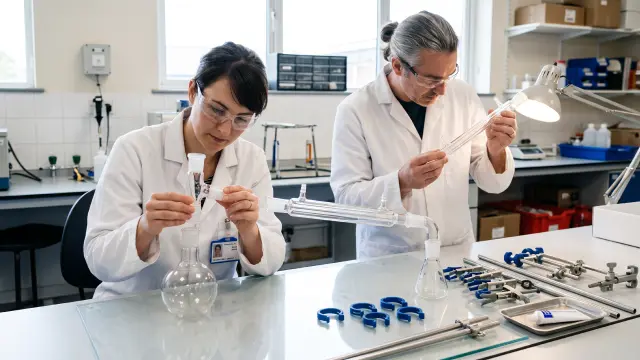
What is Quickfit glassware and when is it used in school science?
Quickfit glassware is a modular borosilicate glass system with standard ground-glass joints that allows compatible components to form assemblies for techniques such as distillation, reflux and gas handling. It is most relevant to post-16 chemistry rather than every school practical. Departments should match joint sizes, component purpose, heating method, support and approved practical requirements before purchasing.
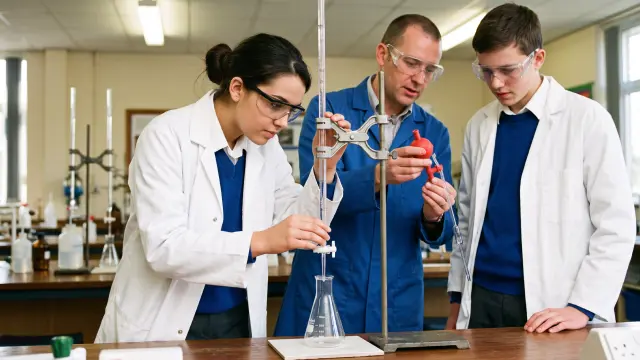
How do you set up a titration for GCSE chemistry?
A GCSE titration station normally requires a burette secured vertically to a suitable stand, a volumetric pipette used with a pipette filler, a conical flask, funnel, white tile and appropriate washing equipment. The exact solutions, indicator, concentrations, rinsing sequence, quantities and safety controls must come from the current awarding-organisation method and school risk assessment.
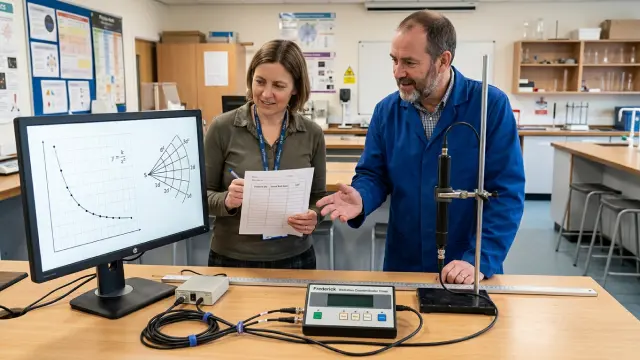
What is the inverse square law for gamma radiation and how is it demonstrated in school physics?
For a point-like gamma source, intensity is expected to vary inversely with the square of distance when geometry and background are properly considered. A school demonstration requires an approved source, compatible detector, controlled geometry and statistical treatment under CLEAPSS L093 and local radiation arrangements. This article explains the relationship but does not provide source activity, distances, timings or handling instructions.
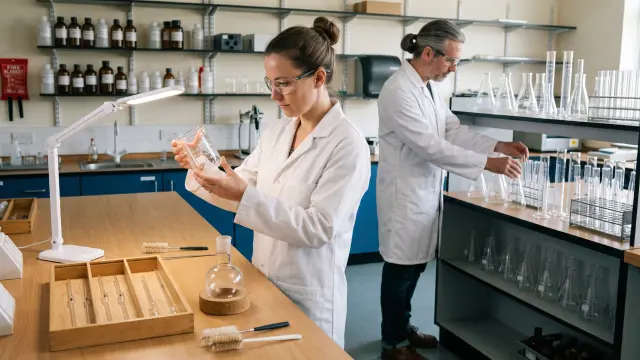
What glassware does a secondary school chemistry laboratory need?
A secondary chemistry laboratory needs durable everyday glassware for containing, mixing, heating, transferring, filtering and measuring, plus specialist pieces for curriculum practicals. The core usually includes test tubes, beakers, conical flasks, measuring cylinders, funnels, watch glasses and suitable pipettes. Burettes, volumetric glassware, condensers and distillation components should follow the exact GCSE and post-16 programme.
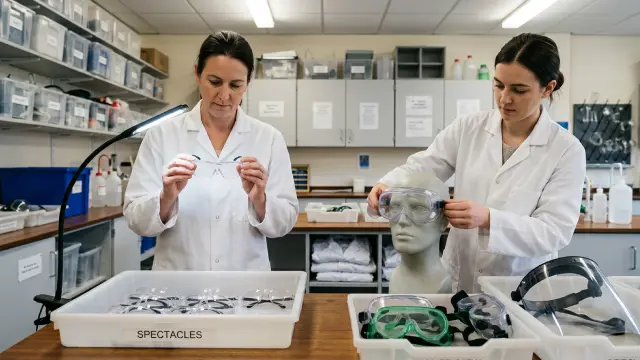
What PPE is required for different types of secondary school science experiments?
PPE for secondary science must be selected by activity and risk assessment, not issued as one fixed kit for every lesson. Eye protection, protective clothing, gloves, face protection or respiratory protection may be required depending on the hazard and controls already in place. Current CLEAPSS guidance and employer procedures should determine the exact type, standard, fit, use and maintenance.

How Technicians Can Make Secondary School Open Evening a Success
A secondary school open evening gives prospective students and their families a chance to see what life at the school is really like. For the science department, it is also an opportunity to show what practical science looks like beyond the classroom.
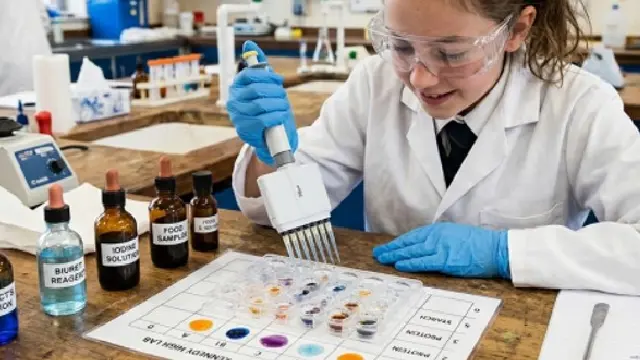
Every student can take part: How microscale can make practical science more accessible
How small scale practical work and thoughtful resource design can help science departments remove barriers for learners
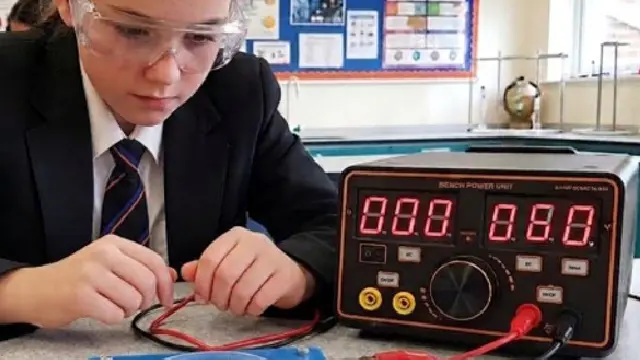
Complement, Don’t Replace: How Microscale Science Supports Practical Science and Builds Confidence from Year 7
How Microscale Science Supports Practical Science and Builds Confidence from Year 7
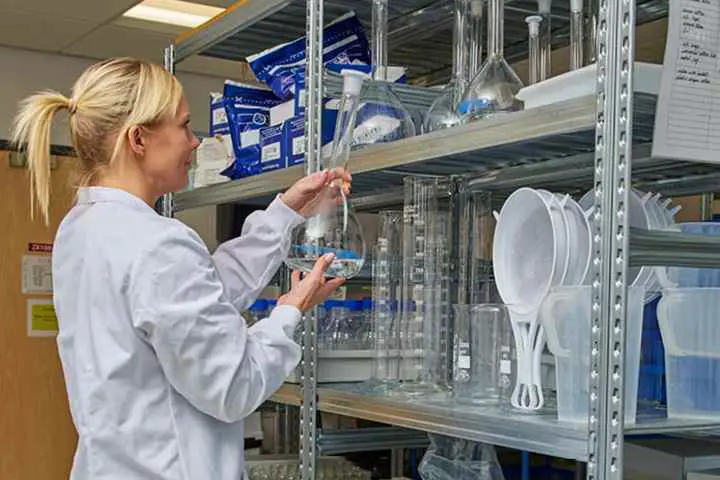
Lab & Prep Room Science Technician Checklist
Philip Harris Checklist to help school science technicians prepare laboratories and prep rooms for science practicals.
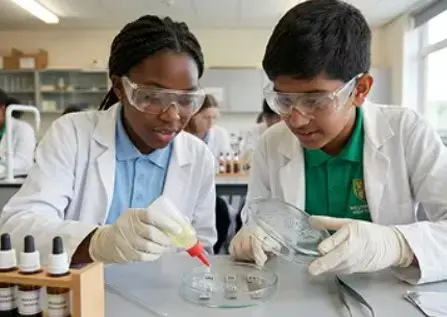
Microscale Science: Small Scale. Big Benefits.
How microscale practicals can help science departments support student learning, reduce waste and maximise budgets.