
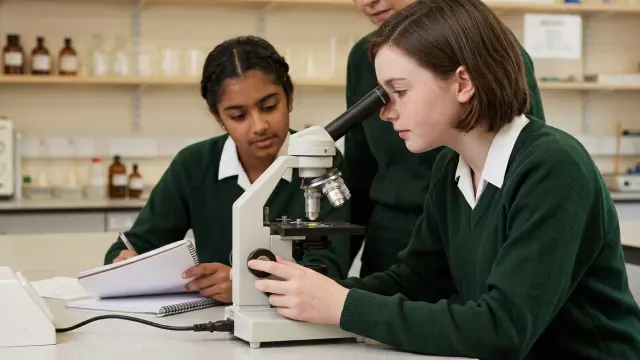
What microscope slides and equipment does a secondary school biology lab need?
A secondary biology laboratory needs clean blank slides, suitable cover slips, light microscopes, approved specimen tools, stains where required, dropping pipettes, lens tissue and secure slide storage. Prepared slides can extend observation but do not replace student preparation skills. Quantities, materials and stain provision should follow the curriculum, simultaneous groups, microscope compatibility and current CLEAPSS guidance.
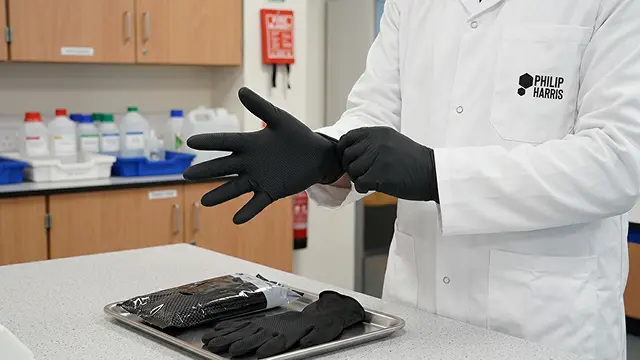
What gloves does a secondary school science laboratory need?
A secondary school science laboratory needs gloves selected for the practicals its risk assessments identify, rather than one type for every lesson. Gloves are not routinely required for all school science work. Where they are needed, choose the material and size for the specific hazard, checking the manufacturer’s chemical compatibility and breakthrough information, fit, dexterity and any latex allergy.
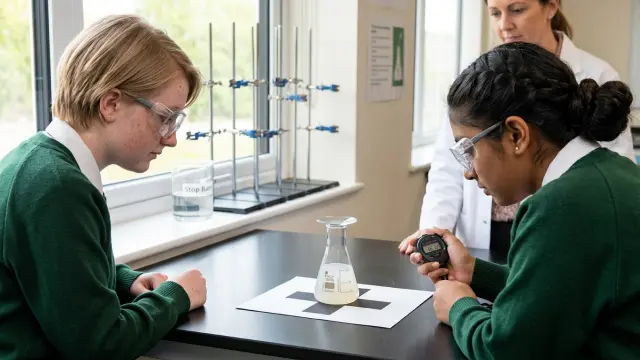
What concentration of sodium thiosulphate is needed for the GCSE rates of reaction required practical?
The sodium thiosulphate concentration required for a GCSE rates of reaction practical depends on the awarding organisation’s approved method and the variable being investigated. Technicians should follow the current specification or practical handbook rather than use a general concentration, then check preparation, handling, ventilation and disposal requirements against CLEAPSS Hazcard HC097b and the school’s risk assessment.
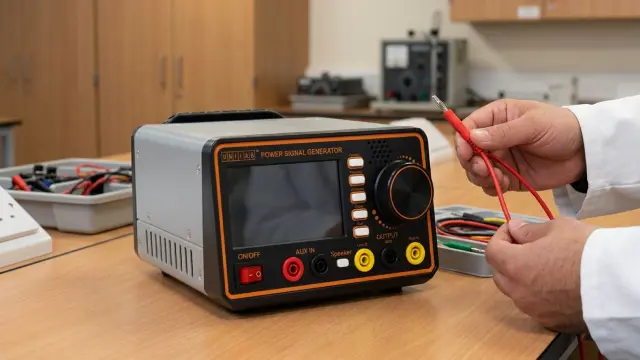
What is the Unilab range and what Philip Harris own-brand equipment does it include?
Unilab is Philip Harris’s own-brand range of equipment for school science practicals. It focuses on physics apparatus, including products used to teach electrical circuits, forces and waves, alongside general laboratory equipment. For a school technician, the useful distinction is the equipment’s teaching purpose: check each product’s current specification, connections and replacement parts before adding it to an existing setup.
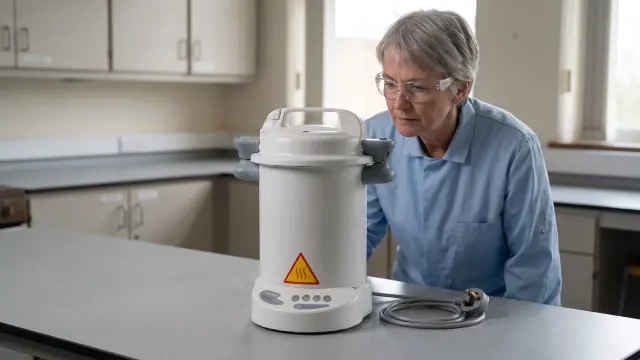
How do you maintain and operate an autoclave in a school biology laboratory?
A school autoclave is pressure equipment and must be operated only by trained, authorised people under manufacturer instructions, the employer’s arrangements and current CLEAPSS GL168 guidance. Before use, confirm whether a written scheme of examination is required, that examinations and maintenance are current, protective devices function, records are complete and the intended load and cycle are specifically approved.

What safety precautions are required when using sodium thiosulphate in a school laboratory?
The main safety precautions when using sodium thiosulphate in a school laboratory are appropriate ventilation, careful preparation, clear labelling, safe storage and suitable protective equipment. When sodium thiosulphate reacts with acid, it can release sulfur dioxide gas. Teachers and technicians must therefore follow the school’s risk assessment and confirm the correct handling, emergency and disposal procedures before use.
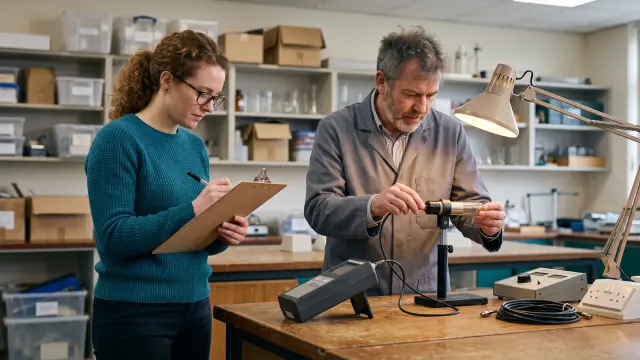
How do you use a Geiger–Müller tube for the radioactivity required practical?
A Geiger–Müller tube is used with a compatible counter or ratemeter to detect ionising radiation and record count data. In schools, every source-based activity must follow the local rules, employer arrangements, Radiation Protection Adviser advice and current CLEAPSS L093. Source type, activity, distance, exposure time, detector voltage, handling and storage must never be inferred from generic instructions.
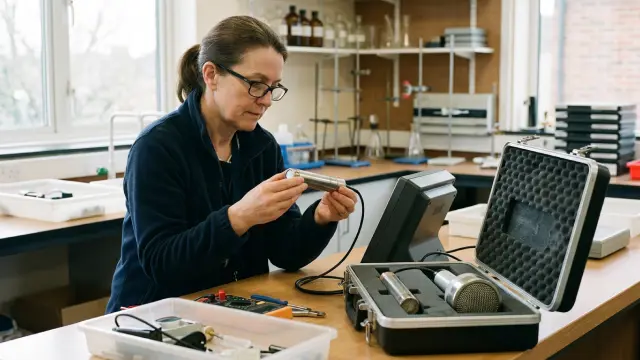
What Geiger–Müller tube does a secondary school physics department need?
A school Geiger–Müller tube must be selected as part of a compatible counting system and the department’s approved radiation arrangements. Compare window type, sensitivity, operating requirements, connector, counter compatibility, protective construction and intended demonstrations using CLEAPSS L093 and GL138. Purchasing a detector does not authorise radioactive-source work or replace Radiation Protection Adviser and employer controls.
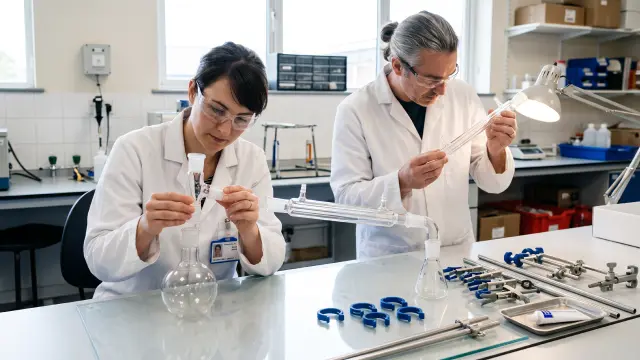
What is Quickfit glassware and when is it used in school science?
Quickfit glassware is a modular borosilicate glass system with standard ground-glass joints that allows compatible components to form assemblies for techniques such as distillation, reflux and gas handling. It is most relevant to post-16 chemistry rather than every school practical. Departments should match joint sizes, component purpose, heating method, support and approved practical requirements before purchasing.

Health and Safety within the Science Department
Health & Safety guide sharing some hints and tips from our Technical Experts to help you follow best practice in the Science Dept.
300 Years of Leading Science Innovation

1841 - Richard Owen Coins the Word Dinosaur
As part of our 200 year anniversary we are celebrating significant events that have taken place since 1817 – 2017.