Inverse Square Law for gamma radiation - A Level Physics
An investigation of the inverse-square law for gamma radiation.
Students must investigate the variation of gamma radiation intensity with distance from a point source. The practical links measured count rate to distance. Students are assessed on correct use of a Geiger–Müller tube and scaler and on safe handling of sources. The investigation involves recording count rates in a table at different distances and plotting a graph to check the inverse-square relationship
Subject: Physics | Level: A Level |
You will need:
Method
Preparation and setup
Plug the GM tube into the scaler and set at the appropriate voltage (450v)
Start the scaler and register the count for the background radiation. Stop the scaler after 20 minutes.
Record the time, t, and the total count, N, on the scaler.
Bring in the source to the laboratory and place it in its holder holder
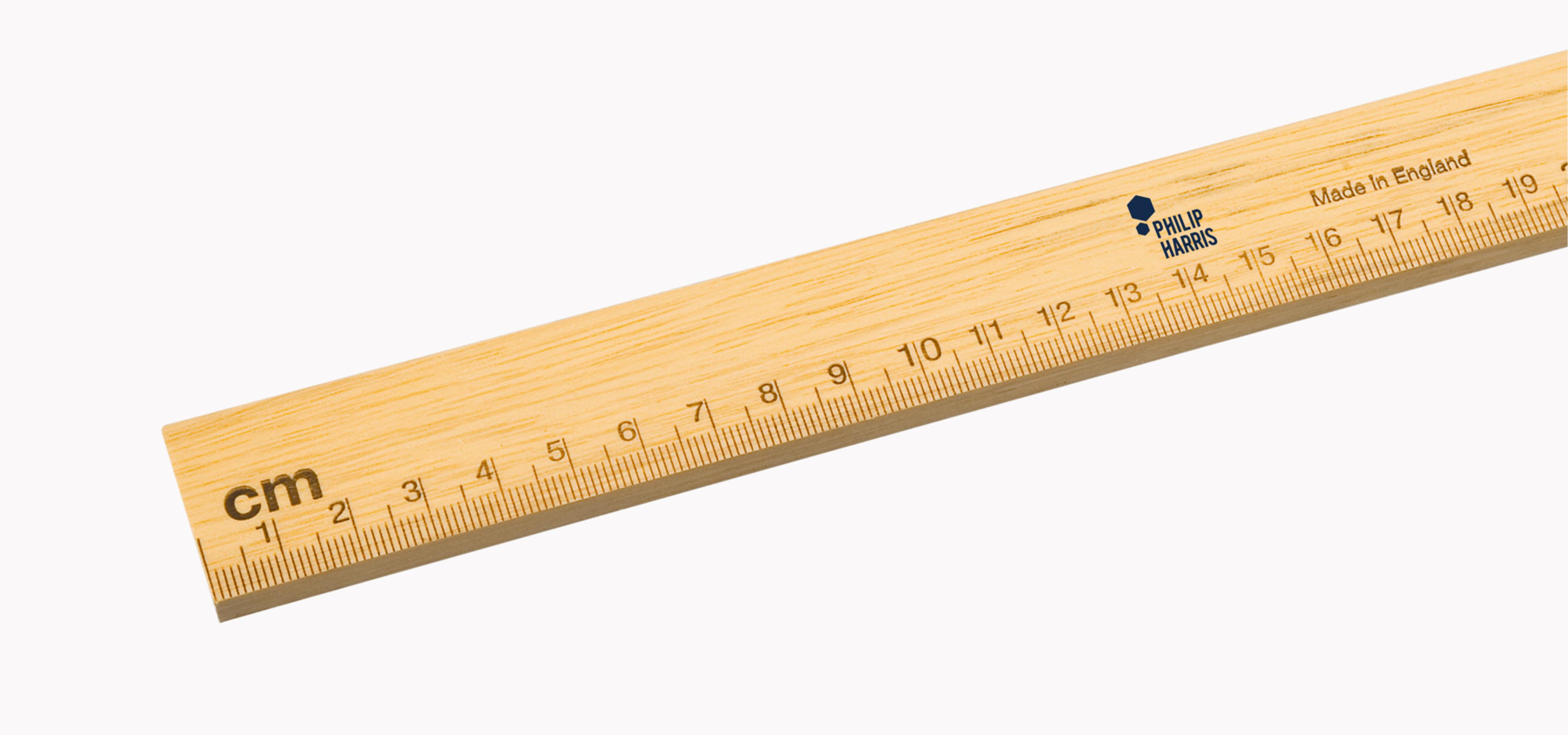
Place a metre ruler between the gm tube and the source as a scale

Conducting the experiment
Set the distance from the front of the source to the front of the GM tube window, X, to 600 mm.
Immediately start the timer and scaler, and take the count, N, after t = 5 minutes (or 10 minutes if the total count is below 400).
Re-set the source position so that X = 500 mm from the GM tube and take the new total count after t = 5 minutes.
Repeat the experiment
Repeat for source - GM tube distances X of 400 mm, 300 mm, 200 mm, 100 mm. (As the source is placed closer to the detector, a shorter timed count will be satisfactory)
Calculations and Analysis
Record N, t, X in a suitable table, allowing columns for count rate C = N/t and corrected count rate C’ (obtained by subtracting background count rate from C) and a final column for 1√C’.
Plot a graph with 1/√C’ on the y-axis and X on the x-axis.
A straight-line graph would verify the inverse square law relationship for gamma rays. The data is plotted this way around (rather that plotting C’ against 1/x2), to eliminate the systematic error in distance measurement. The exact position of the gamma material inside the sealed source and the position inside the GM tube where ionisation takes place is not known. Actual distance between source and detector, d, is given by d = x + e, where e is the systematic error in the distance measurement. This distance e can be found from the intercept on the x-axis of the g.

Technician tips
Teachers, technicians and students must be familiar with the regulations for the use and handling of radioactive materials. Refer to L93 “Managing Ionisation radiations and radioactive substances in schools and colleges” on the CLEAPSS website
The most used closed/sealed gamma source is Cobalt 60. This has a half-life of approximately 5 years. A (nominally) 185 Bq (5µCi) source kept in school for 15 years would only have an activity of around 23 kBq (0.6µCi), which may be too low to obtain satisfactory results.
The scaler must be compatible with the GM tube used – ie it has the appropriate socket and voltage supply for the GM tube.
When taking count readings the longer the count, the lower the uncertainty. It can be shown that the uncertainty in a total count of N is ± √N. A total count of 400 will have an uncertainty of ± 20 or ± 5%